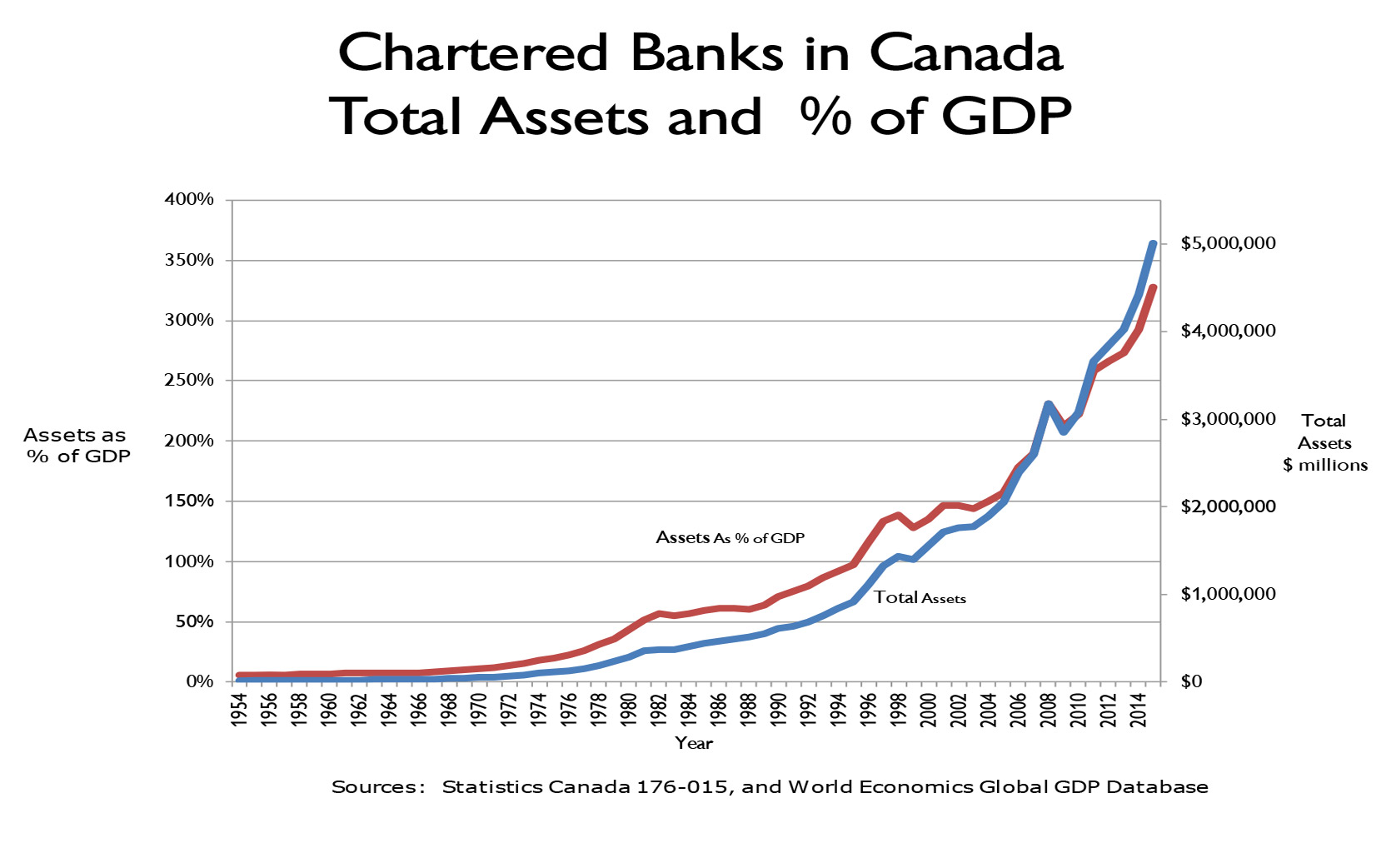
In 1968, a revision of the Bank Act allowed chartered banks to issue mortgages and removed the interest rate cap of 6% which saw the tremendous growth in the assets of these companies. Moreover, financial institutions also began offering new products at this time which contributed to their fortitude, such as credit cards, personal checking accounts, and daily interest savings accounts which invigorated the Canadian consumer and allowed for their greater financial prosperity while contributing to a much more robust banking system. Therefore, such innovations and growth as a function of deregulation while maintaining adequate regulatory provisions benefit everyone, and a large, stable banking system should be pursued by all regulatory agencies. Furthermore, the US has the largest financial system in the world and inadequacies in its regulatory code has contributed to a high degree of instability in recent decades. However, innovations during this time by US financial institutions, such as junk bonds, ATMs, interest rate swaps, and debit cards contributed to the prosperity of all Americans and made possible what are considered today to be industries facilitating the production of unprecedented amounts of wealth and amelioration of the quality of life of all Americans, such as the cable and telecom industries all while contributing to the rapid growth of the banking sector during this time.
 1946-1982